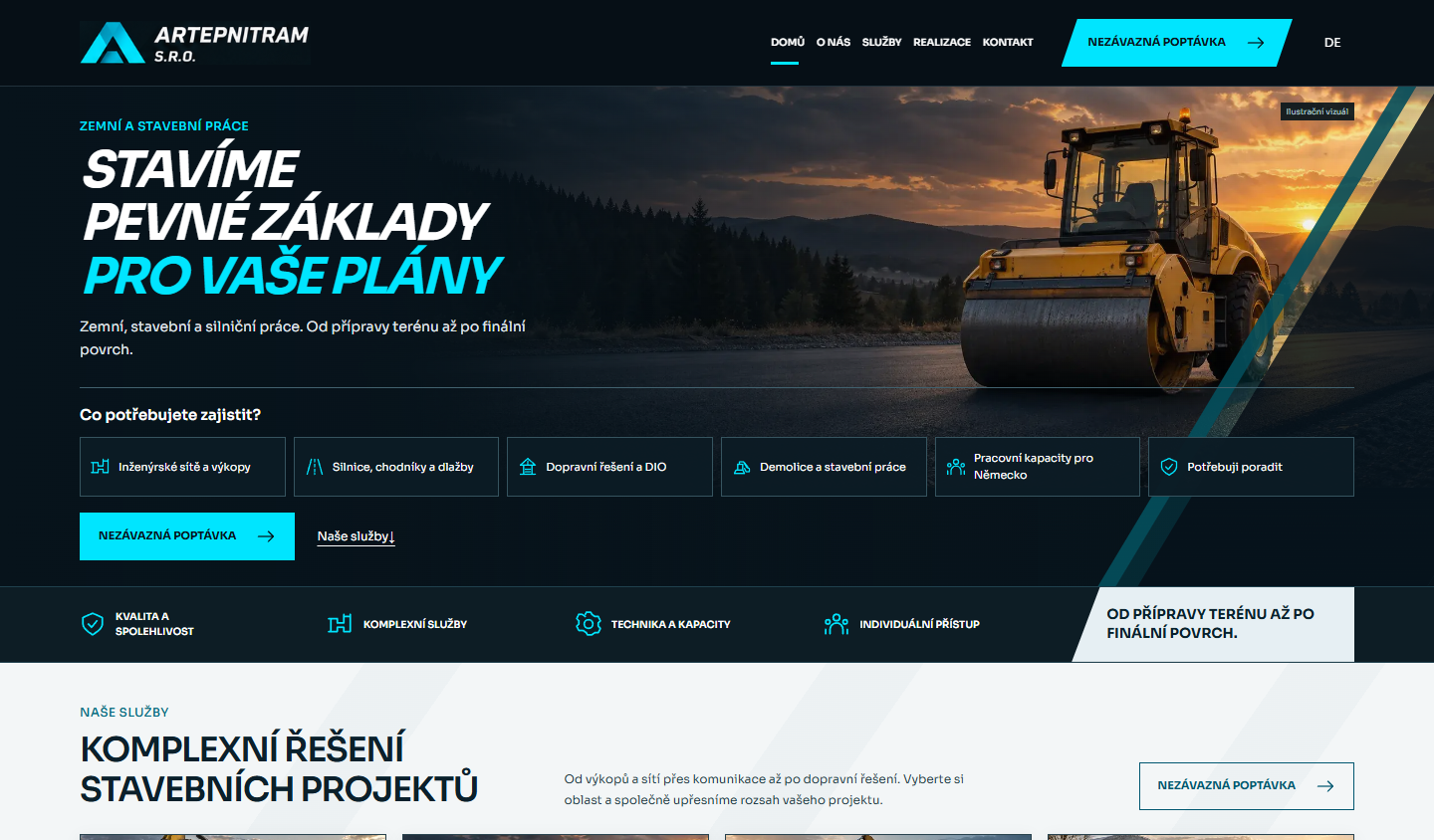
Turn a broad service portfolio into clear areas so visitors do not need to read the entire leaflet before knowing whether the company is relevant.
← Back to projects
CASE STUDY · ARTEPNITRAM
From a business card and leaflet to a website with a clear system.
There was no finished web brief and no ready-to-publish website copy. We had two real source materials: a business card and a one-page service leaflet. Our job was not to redraw them in a browser, but to understand what the brand and service offer actually needed to communicate.
01 · INPUT
What we started with
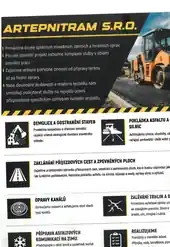
Both source materials contained useful facts, but they spoke in different visual languages. That made them inputs for facts and character, not a finished design system.
01Business card
02Service leaflet
02 · INTERPRET
The first decision was not “what should the header look like?”
We had to reconcile two different visual signals. We took the cleaner turquoise identity from the business card and the industrial energy, diagonals and field-work character from the leaflet. The goal was not a digital copy of the brochure but a coherent web identity.
03 · CONTENT
What the leaflet actually covered
01
Demolition and building removal
02
Asphalt laying and road repairs
03
Access roads and hardened surfaces
04
Drain/manhole repairs
05
Crack and joint sealing
06
Winter preparation of asphalt roads
07
Utility connections, scaffolding and traffic signage
08
Project and traffic-engineering support
04 · DESIGN
What NovaDiamond had to design
Connect content and enquiry actions to the visitor’s need instead of using one universal page for everything.
Unify different source materials into one technical, modern and mobile-friendly identity.
Build the structure so references, project photos and additional services can be added without another redesign.
05 · RESULT
The result is not “a website made from a leaflet”
Limited source material becomes an independent digital product: clearer service architecture, responsive design, a prepared enquiry journey and a foundation for Adaptive elements. That is the difference between copying supplied content and designing a solution.
- mobile-first design
- structure based on visitor needs
- approved technical visual direction
- room for future references and photography
This case study describes our design and development process. We do not yet publish business results or claim an increase in conversions.